Saturday, 2 April 2016

Top 20 Best Education Systems Countries In The World

The following is a list of the top 20 Best Education Systems countries in the world and where there strengths and weaknesses in the education system lye’s. It’s purely to show the areas they are doing well in and what needs to be improved.
1.Japan : Japan has had the best education system in the world for three straight quarters in a row. The main reason for being at the top is its technology based educational background and a firm investment in its education system with a lot of money being put into it.

2. South Korea : South Korea comes 2nd on the top 20 most educated countries in the world. It is worth noting that South Korea was able to defeat Japan in 3 out of the 5 levels that were looked at in the ranking but just couldn’t out pace Japan. This was mainly due to the fact that Japan has invested more into early childhood education compared to South Korea.
3. United Kingdom :The UK seems to have done quite well in this poll done on September 2013.Of all the European countries, the UK is the only country that was able to make it to the top 10 of the ranking.
4. Singapore : The Singapore education system has continued to impress over the years and is giving the UK education system a run for its money. The country ranks highly in primary education and is thought to be inching closer to beating the UK in terms of quality education.
5. Russia : Their luck of investing in early childhood education has been their major undoing as its the main reason why they are not ranked at the top of the list. Russian education system is simply the best.
6. Finland : It is important that although Finland is considered to have one of the best education systems in the world, it does not rank first in any of the levels that were looked at. Its early childhood enrollment was quite poor a fact that made it miss out on the top 5 ranking.
7. Canada : of all the countries in the world, Canada has the highest rate of college graduates. Although this is quite impressive they tend to overlook the benefits of investing in their children’s education in terms of early childhood education. Once they do that they will simply rank highly on the list.
© Serg Nvns - Fotolia.com
© Serg Nvns – Fotolia.com
8. Netherlands: Netherlands is quite the opposite of all these other countries. They have invested a lot in early childhood development and are ranked quite highly but have not done the same in the other areas.The country has one of the lowest high school graduates hence their poor ranking.
9. Ireland : Ireland has done quite a great job with their education system. If only their government would look into the early years of development of their children and invest in that area they would definitely give the other countries a run for their money.
10. Israel : It is known that Finland has modeled their education system based on that of Israel. This is the main reason why Finland is ranked highly. The only reason why Israel has not been ranked highly is the same as that of other countries i.e not investing in their early childhood education program.
11. China : It is worth noting that China has one of the largest education systems in the whole world. With this fact one cannot help but wonder why their education system is still ranked one of the best considering the high number of students involved. Their major undoing is the low number of students competing high school and poor investment in early childhood education.
12. New Zealand : New Zealand can easily give any of the top 10 ranked countries a run for their money. Their major undoing is their poor primary level test scores.
13. Norway : This is also another country with a great education system. It is only ranked lower due to its poor primary level test scores.
14. Belgium : Belgium was doing so well on their education system until they started decreasing funding to their education sector.
15.Germany : Germany has always ranked highly as a power house as far as education is concerned. However it has seen a steady decline on this area due to its inability to address social change in the country.
16. Denmark : Denmark tends to perform averagely in all levels of education. It has quite a remarkable early childhood education system.
17. Estonia : No one ever thought that this small country could rank higher than even the United States as far as education is concerned. Estonia has an impressive primary and early childhood education system.
18. United States of America : Most people thought that the United States would be able to rank highly due to its financial muscle but this is far from the reality. The US needs to work on their high school graduation rates and their early childhood education in order to rank highly.
19. France : The country has an impressive early childhood education system but it all stops there with years of neglect of other levels of education taking its toll on the education system.
20. Portugal : Portugal closes the list of the top 20 most educated countries in the world. Its high school graduation rate however is still contentious as it has been challenged by the European Union.

20 Best Education Systems In The World

Education is one of those things that is considered pretty important throughout the world, but it still remains that not every country does it the same and indeed some countries are better at it than others. In the west we often assume that our own education systems are the best, but that may not actually be true. An education group called Pearson periodically test such assumptions by comparing measurable things like grades and attempt to rank different countries according to the success of their education system.
Needless to say, results vary, but the results are still interesting, particularly when you learn that the USA, long known to have one of the best education systems has recently been ranked in 14th Position, a long way below many European countries.

Which countries have been classed as the most successful in offering education to their citizens?

The Social Progress Imperative has compiled research on basic education levels throughout the world and presented it via the Social Progress Index; this offers a rigorous and comprehensive way of measuring social progress, including – and most relevant for our current interests –  a score for a country’s level of access to basic knowledge including factors like adult literacy rate, primary school enrolment, secondary school enrolment, and women’s mean years in school.
These components determine which countries offer better educational opportunities. We’ve compiled the list of the ten best-performing countries when it comes to access to basic education, according to research from the United Nations as brought together in the SPI basic education ratings:
Read on to find out how and why these ten countries are so well-educated. (Picture: Francisco Osorio - University Life)
Countries with the best education system

Key findings: 2015/2016

  • East Asian nations continue to outperform others. South Korea tops the rankings, followed by Japan (2nd), Singapore (3rd) and Hong Kong (4th). All these countries’ education systems prize effort above inherited ‘smartness’, have clear learning outcomes and goalposts, and have a strong culture of accountability and engagement among a broad community of stakeholders.
  • Scandinavian countries, traditionally strong performers, are showing signs of losing their edge. Finland, the 2012 Index leader, has fallen to 5th place; and Sweden is down from 21st to 24th.
  • Notable improvements include Israel (up 12 places to 17th), Russia (up 7 places to 13th) and Poland (up four places to 10th).
  • Developing countries populate the lower half of the Index, with Indonesia again ranking last of the 40 nations covered, preceded by Mexico (39th) and Brazil (38th).

Key findings: 2012

  • These two countries have similarities in their education systems, but many differences too. South Korea it could be argued is one of the most dedicated countries in the world. Children often attend school 7 days a week and do homework from a very young age.
  • In both Korea and Finland though, education is held in high regards and teachers are treated with great respect (equal to how we revere doctors or lawyers in the west).
  • Interestingly, South Korea also score ‘moderately proficient’ in English speaking ability, which is a good result for an Asian country. They actually speak English better than the French do, which is probably due in part to their strong emphasis of English learning and a high number of native TEFL teachers working over there.

Top 20 countries 2015/2016


  1. South Korea

    • Japan and south-Korea have fierce competition for the 1st rank. Koreans defeated Japan in 3 levels. Japan despite investing in childhood education is compromised in some rankings as no#2 and almost tying with Japan in the ranks. Do you know that children in South Korea attend school often seven-day a week? The national education budget estimated last year was $11,300,000,000. The literacy rate is total 97.9% out of which males are sharing 99.2% and 96.6% of females.
    • The GDP (PPP) per capita estimated in 2014 is $34,795.  
  2. Japan

    • The technology-based educational structure has provided the nation with some great figures in the knowledge and insight.
    • The GDP nearly 5.96 trillion USD is well evident to prove the claim.  
  3. Singapore

    • The strong and highly ranked primary education system is none less than 3rd rank in the competition.
    • The GDP (PPP) per capita is U$D 64,584 is also number 3rd in the world.  
  4. Hong Kong

    • The school education management is pretty much in the way as UK model of education. The educational budget for the last year was $39, 420 per capita. The primary, secondary and higher education levels are exemplary in their approach and work. English and Cantonese Chinese are the mainstream languages for educational texts. The 94.6% literacy rate is making a pretty good sense about the numbers.
    • The GDP (PPP) per capita accumulated in 2014 is $404.892 billion.  
  5. Finland

    • The old champion is loosing ground to it´s asian rivals. A number of folks still consider Finland as no#1 in the best educational system which exactly isn’t the fact anymore. The premature child admission is a big drawback in the system. The no tuition fees system has an annual educational budget of €11.1 billion.
    • The country’s Gross domestic product wasn’t less than $36,395 (per capita).  
  6. UK

    • With the devolution of the Education in UK, the individual governments are administrating the matters relating education on their own. The Scottish, Welsh, Northern Irish and English governments are minding their businesses on an individual basis instead of a collective dealing under kingdom’s authorities. The Pearson has ranked UK second in the European ranks and given the rank of #6 in the worldwide ratings in their 2014 publication. However, as a matter of fact Scottish system has a slight edge over the England when it comes to comparative competitiveness.
    • The GDP per capita is 21st highest in the world with $38,711.  
  7. Canada

    • English and French are the primary levels for interacting with bookish knowledge. The literacy rates are not less than 99% (Both male & female). The attainment ratio is also recording good percentages. The college graduates have the world’s highest ratio. The Canadians follow compulsion in the education up to the 16 (most provinces) or 18 years (exception for a couple). The educational calendar varies from 180-190 days. The results will be impressive to a great extent after prioritising the investments in childhood education.  
    • GDP per Capita: $44,656 Canada is investing 5.4% of its Gross Domestic Product in the education sector. 
  8. Netherlands

    • The low investments, weak planning and management in the high school education, have put Netherlanders on 8th in the ranking. 
    • GDP per Capita: $42,586 
  9. Ireland

    • The literacy rate is 99% for each male and female. The education in the country is free for all levels from primary to third or college/university level. The students from the European Union are the only to be charged for fees and funds, mainly the tuition fees.  
    • The Irish government is having an investment of 8.759 billion euro annually on the education.  
  10. Poland

    • The polish ministry of education is heading the business in the country. The Pearson and Economist combine ranked the country as the 4th best in Europe and the no#10 in the world on the accounts of its well established primary, secondary (lower and upper) educational bases. 
    • GDP per Capita: $21,118 
  11. Denmark

    • The Denmark’s educational structure consists of Pre-school, primary, secondary, higher and adult education. The secondary education further divided into gymnasium, higher preparatory, higher commercial, and higher technical and vocational education examination programs. Likewise, post-secondary education also includes a number of programs. The education is compulsory for the children up to the age of 16. The “Folkeskole” or post-secondary education isn’t mandatory, but 82% of the students are enrolled which is a damn positive thing for the nation. The educational and UN’s Human development indexes are among the highest in the world.  
    • GDP per Capita: $57,998 
  12. Germany

    • Germany is dedicated to developing one of the best educational systems in the world. The education is fully a state matter and hence has nothing to do with the federal government. The kindergarten is optional, but the secondary education is compulsory. Secondary education follows five types of schools. German universities are among one of the world’s best institutes and a powerhouse to impart education in Europe.  
    • GDP per Capita: $41,248 
  13. Russia

    • There is much that can be done to improve the ranks as the country has never prioritised or paid heed to the childhood and primary education. The literacy rate is rounded off to 100%. A World Bank survey figured the 54% of Russian labor force as graduated which is undoubtedly the highest achievement in college level education in the world. The current educational expenditures are above 20 billion USD of the year 2011.  
    • GDP per Capita: $14,645
  14. United States

    • Many would fancy US as the nation top ranked in the education systems which is a far off thing. Despite a well developed and one of the strongest economies in the world, the educational systems are ranked are not even cracking in the top 10. The $1.3 trillion (overall) national educational budget is earning a literacy rate of 99% (both male & female). 81.5 million Students are enrolled annually with 38% in primary, 26% secondary and 20.5 million making to post-secondary. 85% of the students have attained the secondary diploma while other 30% of the post-secondary diploma holders are also estimated. All the citizens are entitled to free education until high school education.  
    • GDP per Capita: $54,980 (6th highest in the world) 
  15. Australia

    • The annual budget is more than $490 million more than 5.10% of GDP in 2009. The English is the primary mode of education in the country. The primary literacy rate is nearly 2 million. The nation owns 99% literacy rate. Secondary diplomas mark a percentage of 75 while post-secondary diploma has 34% attainment. The states and territories are almost in full control of their respective educational systems and boards. The PISA has evaluated the Australian education system in terms of reading, science and mathematics as 6th, 7th & 9th. The Pearson ranked Australian education as #13 in the world. 
    • GDP per Capita: $44,346 
  16. New Zealand

    • The national education spending incurred by the ministry is NZ$13,183 million for the session 2014-15. English & Maori are the mainstream languages to get educated. The poor primary test scores are a major setback to improve ranks. The PISA accumulates the country 7th in science and reading each while 13ht in math. The education index amassed by HDI ranks country highest in the world but it only assesses the childhood years spent at school instead of the achievement levels. 
    • GDP per Capita: $30,493 
  17. Israel

    • The approximately 28 billion Sheqel budget manages the educational business in the country. Hebrew and Arabic support the education in the country. The literacy rate of both males and females is cracking the 100% mark. The primary, middle and high school education make the comprehensive education system of the country. OECD ranked Israel as second most educated nation in the world in 2012. The report revealed the fact that 78% of investments being drawn are public while 45% of the citizens have made to high school or University/college education. The lower rank suggests the very common reason which is obviously poor investment levels in primary and child education.  
    • GDP per Capita: $35,658 
  18. Belgium

    • Belgium has a diverse education system mainly financed, run and administered by Flemish, German-speaking and French. The federal government has to play a minimal role in sponsoring and funding the community’s education systems. The education in the country is compulsory up to secondary schooling. All the communities follow the same stages of education including basic, preschool, primary, secondary, higher, university and vocational levels. The UN’s education index ranked country 18th in the world. 
    • GDP per Capita: $38,826 
  19. Czech Republic

    • The education is free and has compulsion up to the age of 15. The education system mainly has five divisions including pre-school, elementary, high school, colleges, and universities.  
    • GDP per Capita: $28,086 
  20. Switzerland

    • The education is purely a matter taken by the cantons. The primary education is obligatory for the children in the Swiss state. 10 of the total universities in the confederation are owned and run by the cantons while the remaining two are under federal jurisdiction managed and controlled by State Secretariat for Education, Research and Innovation. Basel is well-known for hosting the centuries-old university of Swiss confederation founded in 1460 and well-known for the medicine and chemical research. The Switzerland has the second highest rank after Australia for enrolment of foreign students in tertiary education. The country owns a relative higher numbers of Nobel Laureates. The country is ranked 25th in science, 8th in math and 15th in overall positions. The Global Competitiveness Report released by World Economic Forum ranked country no#1.  
    • GDP per Capita: 47,863 (8th highest in the world) 

2012


  1.     Finland
  2.     South Korea
  3.     Hong Kong
  4.     Japan
  5.     Singapore
  6.     UK
  7.     Netherlands
  8.     New Zealand
  9.     Switzerland
  10.     Canada
  11.     Ireland
  12.     Denmark
  13.     Australia
  14.     Poland
  15.     Germany
  16.     Belgium
  17.     USA
  18.     Hungary
  19.     Slovakia
  20.     Russia

Saturday, 26 March 2016

Education for students through apple app


We’re making Apple devices as easy to deploy as they are to use.

New features coming this April will make the setup process simpler than ever. You’ll be able to get students and staff enrolled quickly, configure devices automatically, and easily buy and distribute apps and books.
Image result for apple education


Get your school up and running.

We’ve created a central system where technology managers can create accounts for everyone in the school, define roles and permissions, manage devices, and buy and distribute content in time for the first day of class.


PREVIEW

Apple School Manager

The new Apple School Manager is a simple, web-based portal that has everything admins need to deploy iPad and Mac in schools. Automatically create Managed Apple IDs for all students and staff, configure device enrollment settings, and easily buy and distribute apps, books, and learning materials. And you can log in from a web browser on any Mac or PC.

Apple School Manager Overview
Learn more

Built-in privacy.

Apple will never track, share, or sell student information for advertising or marketing purposes. We build powerful safeguards into all of our devices, operating systems, and services — including Managed Apple IDs, which are kept under the administration of your district. So the security, privacy, confidentiality, and integrity of student information is always protected. And we never track students or build profiles based on their email content or web browsing.

Managed Apple IDs

Managed Apple IDs are a new kind of Apple ID that gives students access to iCloud, iTunes U, and Shared iPad, while maintaining the control schools need. Apple School Manager lets you automatically create Managed Apple IDs for all students and staff by importing the necessary data from your Student Information System (SIS) or CSV files exported from your school’s directory service. And because Managed Apple IDs are owned and assigned by your institution, you can easily reset passwords, audit accounts, and define roles for everyone in the district.
We think Apple School Manager will save our tech staff lots of time — so we can manage devices, content, and our student accounts all from one place.
Patrick Scanlan
Supervisor of Technology & Information Services, San Jose Unified School District 

Image result for apple education


Set up devices automatically.

We’ve streamlined device setup for both one-to-one and Shared iPad environments.* Now you can wirelessly configure settings and restrictions according to your school’s requirements, then easily assign devices to students, teachers, or class groups.


Apple School Manager and your MDM work together.

You can set up and manage iPad and Mac wirelessly through your mobile device management (MDM) solution. Since your MDM and Apple School Manager work together seamlessly, you can automate setup and enrollment with the right settings and restrictions, then assign devices and apps according to the class groups you’ve defined.

Choosing your MDM solution.

Mobile device management solutions are available from a wide range of vendors, whether your school is better suited for a cloud-hosted environment or an on-premise server. MDM solutions come with different features and pricing, so you have flexibility in deciding how to bring Apple devices into your school.
PREVIEW

Shared iPad

Shared iPad is a new iOS 9 feature for schools that share devices but still want to provide personalized experiences.* Before class begins, teachers can assign any student any shared iPad. Students know which devices to use because their pictures are on the Lock screens. Students can access their personal content using a password or easy-to-remember four-digit PIN. And because data is locally stored on the devices, after they log in, their homework, apps, and assignments are exactly as they left them. So teachers and technology managers won’t lose time backing up or wiping data between classes.
Shared iPad will allow our district to transform a cart of shared devices into a personalized learning experience for each student.
Eric Culpepper
Technology Support Specialist, Goose Creek CISD


Get the right learning materials to the right classes.

Because all of your accounts, devices, and content are in sync, it’s easy for technology managers to provide classrooms with the right apps, books, and learning materials in time for the first day of class.


Buy in volume and distribute wirelessly.

When you purchase apps for iPad and Mac, your education volume discount is applied automatically. And as soon as you make a purchase, it’s simple to use your MDM to push apps and books to the classes, teachers, and students who need them.

Classroom App

Classroom is a powerful new iPad app that helps teachers guide learning, share work, and manage student devices. Teachers can launch a specific app, website, or textbook page on any device in the class, or share student work on a TV, monitor, or projector using Apple TV. They can even reset a student’s password, see which apps students are working in, and assign a specific shared iPad for the class period. The Classroom app is easy to set up on a teacher’s iPad with the help of MDM. And since it uses Bluetooth and Wi-Fi to connect to each student’s iPad, classes can get right to learning without requiring daily support from IT.
View Classroom in the App Store
We feel that IT should be hands-off as much as possible. Teachers need control — now they’ll have more power to manage their technology which reduces support from our IT staff.
Blair Anderson
Technology Director, Shawnee Heights School

Compatible with standardized testing platforms.

iPad is an approved device for securely administering summative exams, including state standardized tests from the Smarter Balanced Assessment Consortium (SBAC), the Partnership for Assessment of Readiness for College and Careers (PARCC), and ACT Aspire. By working with your MDM, you can configure devices for autonomous single-app mode and disable certain features for tests, making iPad a great tool for both formative and summative assessments.

Assessments Overview
Download PDF

Deployment Resources


Apple School Manager Help
Learn more

Classroom Help
Learn more

Getting Started with Classroom
Download PDF

iOS Deployment Reference
Learn more

OS X Deployment Reference
Learn more

Profile Manager Help
Learn more

Apple Configurator Help
Learn more

Education Deployment Guide
Learn more

Educational Technology Resources Database


In today's world, technology is ubiquitous. New opportunities and ways to integrate technology into the learning process are being created every day. Bringing technology into the classroom serves not only a tool, but also a resource for accessing information that further enables learning. In an age where the ways to integrate technology into the classroom are endless and daunting, New Horizons for Learning aims to evaluate technological methods and devices in an effort to provide educators with an efficient resource database that is teacher-tested.

We are just beginning the process of developing this Educational Technology Resource Database.
As we develop and evaluate resources,turn to this page for up-to-date, valuable ways to incorporate technology into your classroom.

Educational Technology Resource Database Volunteer Opportunity

Help us help you.
Our users visit this site from all over the globe and bring a wealth of experience. As we move forward with this initiative, our users will be the key to this project's success. After all, whose reviews would you trust? Most likely motivated teachers, with experience in your subject area, who have tested the educational technology resources in their classrooms. Please consider applying for one of the volunteer opportunities below, submitting a resource you would like our team to review, or sharing your experiences with a technology resource that has made a difference in your classroom or school.
  • Educational Technology Reviewer
    New Horizons for Learning is in need of reviewers in six subject areas: English, Fine Arts, Foreign Languages, Math, Science and Social Studies. Reviewers will be asked to try educational technology resources in their classrooms and evaluate their effectiveness and efficiency while providing valuable tips for user implementation. Reviewers will work in online teams, coordinated by a subject consultant, to produce these evaluations of tested resources for the database. Strong writing skills, content knowledge, ability to meet deadlines, and an interest in educational technology are musts. Most importantly, interested applicants should be genuinely interested in contributing their voice to help New Horizons develop a database to increase the ease and efficiency with which their colleagues can access resources to aid educational technology implementation.
For more information, please email nhfl.edtech@gmail.com with your desired position, subject area, and educational background.

Here you can view coming attractions for a search engine to solve math equations, discover a program that allows teachers to explore the depths of the ocean on a boat and communicate observations to their classrooms, and even learn from students working in teams to plan space flights.

Articles on Education Technology:

  • The Weak Signal of Mobile Governance
With technology making society increasingly interconnected in what many have come to call the ?Connected Age,? in what ways will we require a new system of representative democracy? Rick Smyre explores this question in his article The Weak Signal of Mobile Governance found here:
http://www.futuretakes.org/issues/fall_winter2009_2010/vol8no2/article_002.html
Rick is a professional futurist, President of the Center for Communities of the Future (http://communitiesofthefuture.org/), email:RLSMYRE@aol.com
  • Socioeconomic Status Predicts Hemispheric Specialization of the Left Inferior Frontal Gyrus in Young Children

    Raizada, R. D., Richards, T. L., Meltzoff, A. M. & Kuhl,P. K. (2008). Socioeconomic status predicts hemispheric specialization of the left inferior frontal gyrus in young children. NeuroImage, 40, 1392-1401.
    http://ilabs.washington.edu/kuhl/pdf/Raizada_etal_2008.pdf
  • Foundations for a New Science of LearningMeltzoff, A. N., Kuhl, P. K., Movellan, J., & Sejnowski,T. J. (2009). Foundations for a New Science of Learning. Science, 325, 284-288. Can be found through subscription to Science Magazine: http://www.sciencemag.org/


New Innovations and Programs for Teachers and Students:

  •  http://www.onlineteachingdegree.comThe project is a general information website with many resources useful to current individuals involved in the education industry. The site also discusses the offline and online educational paths one can follow to obtain a degree in education or a related field. Thank you for sharing this resource with us, Veronica Jensen!

     
  • WolframAlpha Answer EngineHave you ever wanted to put math or science equations into Google and receive the answer and explanation within seconds? This new type of search engine does just that! Though it is not running just yet, this introductory video will give you a good overview and more information. Get excited! http://www.wolframalpha.com/screencast/introducingwolframalpha.html
  • The Neptune Project

    This program takes teachers on the boat as they explore the ocean depths and the teachers communicate what they are seeing back to the classrooms
    http://www.neptune.washington.edu/
  • The Aerospace Scholars Program at the Museum of Flight in Seattle
Students work in teams to plan space flights to distant planets.
http://www.museumofflight.org/
http://www.newhorizons.org/strategies/technology/dunbar.htm
  • Ashoka's Youth Venture: Everyone a Changemaker
Students have the opportunity to develop local projects that may turn into nonprofits funded through this program.

JHU CTYOnline Mobile Learning Videos

At the Johns Hopkins Center for Talented Youth, students enrolled in the CTYOnline program can access their course materials through mobile devices. These courses feature videos, interactive exercises, quizzes, discussions, blogs, and other features, most of which work reasonably well for mobile users.  Figure 1 shows a video of a critical reading course for elementary students, using the Motorola Android phone, the Flash-based interactive glossary word game is accessible, including sound effects.
Figure 1: Quests and Challenges using the Motorola Android phone
Figure 2 shows some examples of mobile access to the Computer Security Fundamentals course, for students in grade 7 and up, using the Safari browser on the iPhone.  The touchscreen interface is intuitive to use and responsive, but clicking on one of the Flash-based lectures results in a white screen.
Figure 2: Computer Security Fundamentals using the iPhone and Safari browser 
For Droid users, these videos appear, though load time will vary (Figure 3).  Entering text using either the onscreen or physical keyboard is time consuming, though not impossible for short phrases.
Figure 3: Computer Security Fundamentals using Motorola Droid 
The road ahead for m-learning is bound to be bumpy, but mobile phones are already in most teachers’ and students’ hands -- and their hearts, as well -- so the journey may be shorter than we think.
-Excerpt from an article in our Winter 2011 Journal: M-Learning: Promises, Perils, and Challenges for K-12 Education

Consider Your Learning Style Before Signing Up for an Online Course


A January study found that 52 percent of more than 1,000 adults surveyed believed hands-on training was the best way to learn. 

Online puzzle and number games are a free resource for students looking for a fun, alternative method of SAT study.
Online students should think about their preferred learning style before signing up for a class, experts say.
Reading. Reading. A test. More reading. 
That’s how Jana Reid, a high school teacher in Texas, recalls most of the time she spent during her online master’s program in English at Tarleton State University
Looking back, she wished she’d chosen a program with more emphasis on video tutorials, recorded lectures and interactions with peers. 
Someone who needed a more interactive experience would have "gone nuts,” says Reid, who said the process was painful but doable since she's a strong reader. “There was nothing hands-on about it.”
[Watch online students share time management tips.]
Reid is one of many adults who prefer a more interactive approach to learning, according to the 2014 Learning in America Survey
The study, commissioned by Everest College and released in January, found that 52 percent of more than 1,000 adults surveyed believed hands-on training was the best way to learn. Watching visual presentations from an instructor was the next most popular option, followed by reading from a textbook, using the Internet, collaborating with other students, learning through teaching others, listening to a lecture and watching videos. 
“What this survey is showing is people crave interactivity and engagement,” says John Swartz, regional director of career services for Everest College, a for-profit institution managed by Corinthian Colleges Inc.
Whether online programs are getting the message, however, isn’t quite clear.
In an ideal world, most online programs would cater to a wide array of learning styles and preferences – incorporating multimedia tools such as video chats, podcasts, white board demonstrations and films alongside reading, experts say.
[Determine whether to take an online math course.]
But that ideal world is a ways away, says Vernon C. Smith, special consultant to the provost for online education programs at Mount St. Mary's College. Few colleges, he says, are using all the tools at their disposal.
“Most institutions are not at that level of reflection,” he says. “For a while it was just ‘Get your course online’ because the demand was so high. Now we are getting into a new era of sophistication for students. It’s not just about accessibility – it’s about the quality of the experience.”
Since not all online programs cater to everyone's learning preferences, prospective students should do their research ahead of time to make sure their program can provide the experience they need, Smith says.
Visual learners need to be sure their courses involve video, for example, while learners who crave interpersonal interaction should make sure there is plenty of engagement with their peers, he says.
"Understand the strengths of your particular program," Smith says. "More and more institutions are providing orientations. Smart institutions are having students see the technology involved so they can see what a lesson is going to look like."
Chad Adams, a 28-year-old Alaska resident who is earning an online master's in banking and financial management, says he wishes he would have done more research into his program to ensure that material was presented in different ways.
Adams says his undergraduate online program at University of Massachusetts–Amherst was very engaging and catered to many different learning preferences. But he's less impressed with his current program at Boston University, which is heavy on reading and light on interaction with his professor or peers, he says.
"It really does feel like I am paying $3,000 for this class to read this book and try to teach myself," he says. "And that’s a little frustrating because I'm attending this university because I want somebody to teach me. I’m here to learn."
[Discover more online learning trends.]
Even if students find themselves in a situation where their class isn't well-suited for their learning style, that doesn't mean all hope is lost, according to some experts.
Laurel Springer Mayo, director of the Learning Innovation and Networked Knowledge Research Lab at the University of Texas—Arlington, says the most dedicated students will succeed even in the most challenging situations.
“The motivated student will find a way to make it work for them,” she says. “You can find ways to make your strengths matter to you. You have to put it in your head that you are going to do this. You are going to take the time out of your day. Successful students think that way more than 'I don’t learn that particular way. I can’t do it.’”

Are you ready for the New Year… We are…

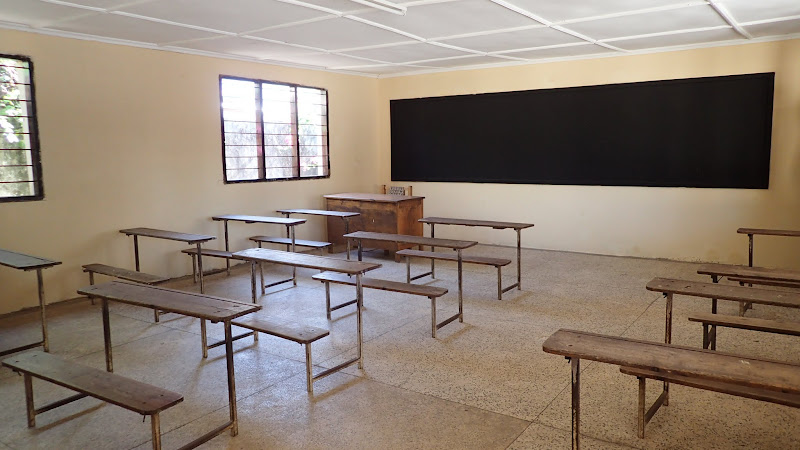
Maybe you’d think it would be quiet when 650 students and 30 teachers close school for the end of the year; and for a few days it was! But then people began beavering away, preparing for the coming year before we all took a well earned break over Christmas and the New Year.
There was tile grinding, painting, varnishing, door fixing, ceiling repairs, sewing, final accounting, building a huge wooden frame for a shade for Christmas Day…
We’d like to say a BIG thank you to Tumaini staff for working together to make this place shine and thanks to our wonderful supporters who have helped us with funding to do all this work.
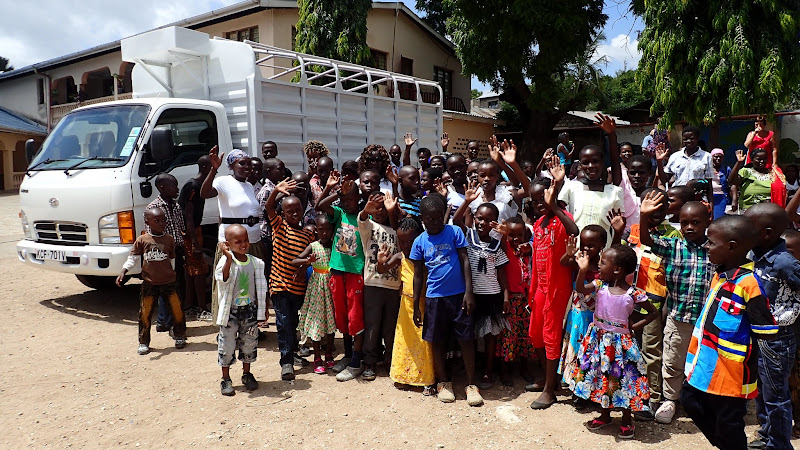
We also had a special blessing ready for the New Year! We took delivery of a brand new Hyundai HD65 Truck for delivering water to the school.
Thanks again for all your support in 2015 and we look forward to an exciting year ahead.


PostHeaderIcon Balloons, bunting & rain!


Balloons, bunting and a bit of rain! That was the start to Saturday morning for the youth committee. The 6 of us are in charge of all youth activities: our big events, youth services and fundraisers! Recently our minds have been turning to Christmas – it’s our job to plan everything Christmassy for church this year!
We have a few ideas up our sleeves but knew that we would have to have a bit of money to make some of them work – namely the church Christmas meal! (pilau, a meal of rice, meat and spices just in case any of you were picturing a roasted Turkey with cranberry sauce!)
So before our Christmas activities can take place, we needed to raise some cash! In the last 2 weeks we’ve had 2 fundraising events which have been lots of fun!
The first was our Form 4 leavers bash. The Kenyan school year runs from January to December so our students have just finished their end of secondary exams and we provided a party to help them celebrate! Loud music, sodas, sweets and lots of dancing! It was great fun and kept the young people from the other bars which may not have been so safe for them.
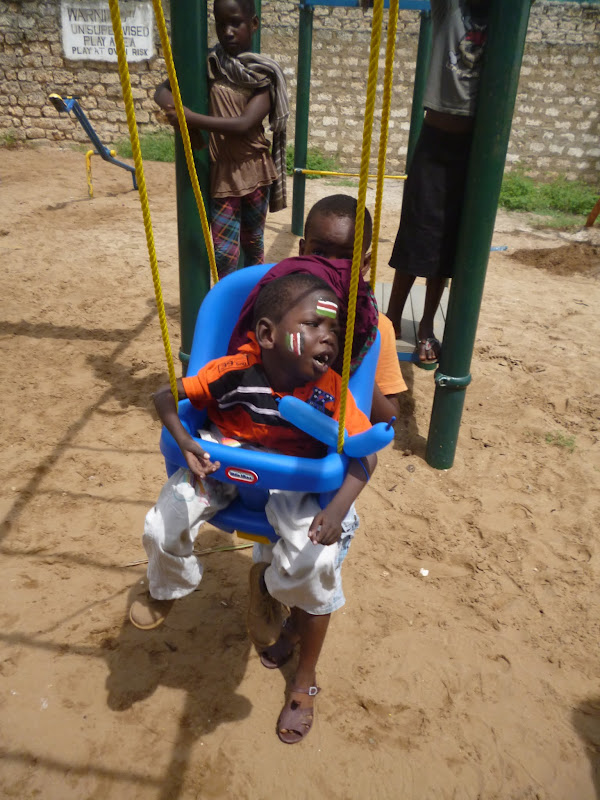
But Saturday was by far the best! – We had a family fun day, about 80 kids attended and quite a few parents, we had face painting, nail painting, a dance competition, a tuck shop, other games and best of all, the trampoline! Most of the children attending had never been on a trampoline before so watching them was both hilarious and heart-warming!

A group of mums from Molly’s special needs support groups came along with their children which was lovely and really added to the day, the kids were able to have some time on the trampoline too and the mums joined in with the parent’s dance competition!
We had a great group of helpers who turned out to be a dab hand at dismantling and reassembling the trampoline as well as climbing rickety ladders to give our wedding bunting it’s second airing and much fun was had blowing up over a hundred balloons (and popping quite a few too!).
Overall, it was a wonderful day and we are very happy to say that we reached our goal for our contribution towards the meal! – Well done team and thank you for everyone who came and for those who prayed for the rain to clear!


PostHeaderIcon The narrow, winding path…


Fresh air filled our lungs as we climbed the hills to Mgambonyi; the car windows open to equalize the air pressure. During the day it was hot and extremely dry, grass and water are scarce from a long dry season so keeping hungry cows fed and watered is giving farmers a huge challenge. Farmers have small stores of dry grass remaining and others buy bundles carried by motorbike from the lowlands.
On the first night, the stars shone brightly, the sky was clear, the air crisp. Sleep was sweet and well needed in preparation for a busy day ahead. We set off walking to one of the farms where we’d agreed to meet with all Zaidi’s partnering farmers. During the meeting we discussed the importance and benefits of full participation and ownership of the project by farmers. All farmers aired their ideas, views and concerns, which led to many constructive conversations of how to move forward to improve their supplies of food and water for cattle, improve their levels of support for each other, stretch the assistance to welcome more farmers and develop their farms, one by one.

The early hours of the next morning brought welcome rain. It felt chilly in the wind and rain on the tops of the hills. Setting off wearing four layers (including a raincoat) we walked to visit one of Zaidi’s new farmers. We set off through familiar areas but then branched off down a hillside we’d never been down before. The views were absolutely breathtaking, with low clouds passing through the valley so close; you could reach to take hold of them. We walked along a path that not even a small motorbike could pass, down and then up small, winding pathways, almost impassable; it seemed almost it’s own community.

Stella, the new farmer has two children and she cares for her aged and sick mum who, when we arrived at their house, was completely wrapped in blankets on a mattress in the sitting room. The previous day, Stella had come to our meeting, it was the first time she had really been out for three years. It was great to see the benefit that Stacey (Stella’s new cow) would bring to that whole family. We were welcomed to Stella’s brother’s home (her nearest neighbour) for a cup of tea. Leaving their home, we visited families on the way back up the hill; it made us smile. We began, just Glyn, Pastor Ronald and I but as we continued our journey we kept adding people. At one point there was a line of ten people hiking up the hill together chatting stories and shouting greetings to others digging on the hillside in their farms! It’s a privilege to receive visitors and one way of appreciating their visit is to escort them on their way. We met many new and lovely people that day!

Kiriwa at Bob’s Place is a community nursery school whose teachers, Catherine and Margaret are doing a wonderful job teaching many young children from the area. Now they have their own building they are able to operate until 3pm, giving children lunch, as well as a mid morning break for porridge. Forty-three children attend the school, with three year groups being taught together. One group of children is preparing to join Mgambonyi Primary School in January, but more are waiting to come to join this fast growing school. Parents, teachers and locals are pulling together to build two extra classrooms and parents are being encouraged to make sunbaked mud bricks for the building. It’s a great community initiative! The children’s smiles are infectious, especially wrapped in their little, bright red balaclavas. Everyone enjoys play-time, “Make a circle, a big, big circle…” the children shout and then they breathe deeply in and out, taking in lots of refreshing air and continue with lots of songs, dances and games.

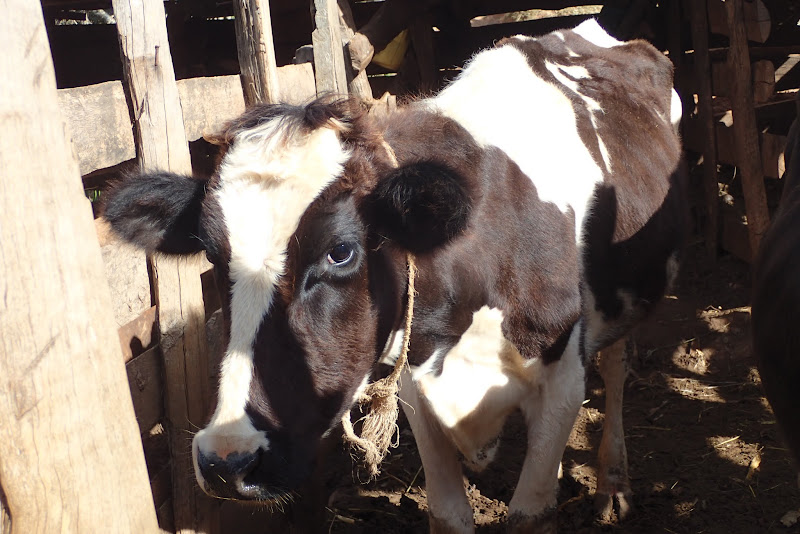
Zaidi (a Swahili word meaning, ‘more’) is an Education for Life project providing farmers with dairy cows, repaid by the farmers from the sale of their milk, generating income to provide a cow for another farmer. As the project develops, we’re also able to assist farmers to buy water tanks, which enables them to keep a constant supply of water for thirsty cows. This project is in it’s third year and it’s growing, our first calves are now pregnant, placed with new farmers and expecting young ones themselves! There are twelve cows within Zaidi at the moment, but watch this space, we’re growing ;0) With a high demand for milk in Kenya, the dairy will buy as much as the farmers can produce.
Thank you for your support and prayers, Zaidi is growing; there’s even ‘more’ to come!


PostHeaderIcon Passing the batton…


Relay races are always fun to watch (and participate in) anticipation and excitement fill the air, mingled with loud cheers! Maybe you’ll think I’m about to embark on a post about sports and fun day, that’d be a fair guess… Try again…
It’s exciting to see people passing on skills and developing responsibility!
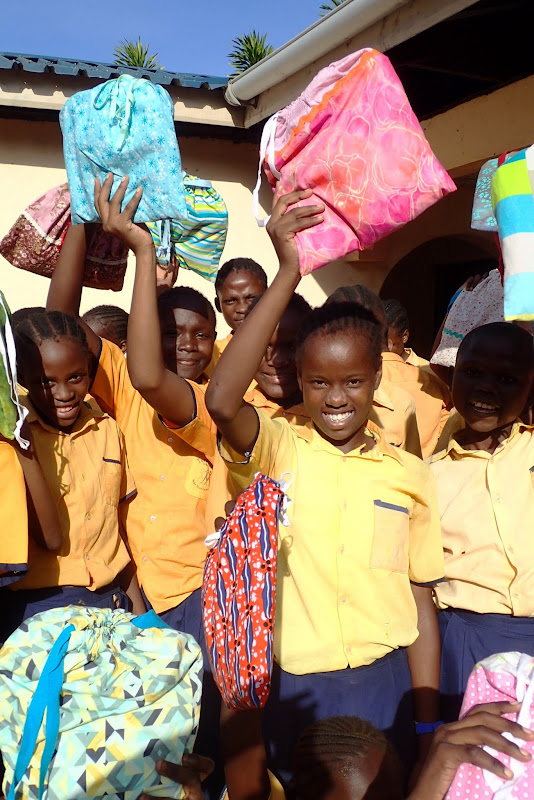
Earlier in the year we were able to give kits containing washable sanitary pads, donated to us by ‘Days for Girls’ www.daysforgirls.org to a few of our primary school girls, but yesterday we were able to give even more, totaling 69 distributed kits. There are still more to come when we can get them here from England and even more excited young ladies eagerly waiting to receive their very own kit.
Maybe you’re wondering ‘OK, why the link with relay races?’

The first time we got the girls together to talk about ‘periods’ and adolescence, the session was led by three of us and we discussed many things, prompted by so many questions. Then, after receiving some kits from Days for Girls we got a group of fifteen girls from upper primary together, who we knew would greatly benefit from receiving the kits. There were a lot of happy smiles and words of thanks to the wonderful people who had made these kits for them. It was great!
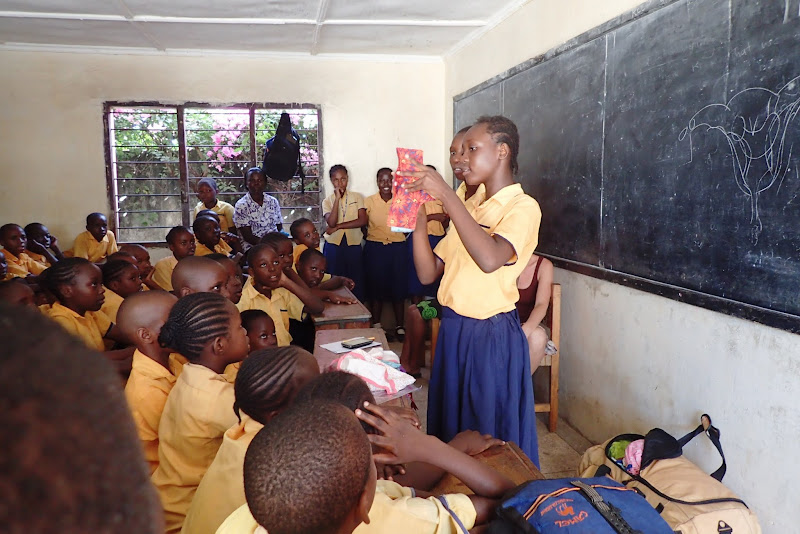
But yesterday was really amazing! Our Deputy, Madam Florence began the session to a classroom of more than 100 primary school girls and then she handed over to four young ladies who received their kits last time. Two girls took one kit and demonstrated the uses of everything in the kit, another young girl talked about hygiene, how to keep the pads, how to soak and how to wash them and yet another girl was able to explain to her peers the importance of personal hygiene; how you can take care of yourself and the dangers you could face if you fail to look after yourself properly. It was amazing to see these young ladies sharing with their peers and each was celebrated with cheers and an enthusiastic round of applause. I was so proud of them!

Thank you ‘Days for Girls’, to all who give, to all who sew and pay for postage and to Madam Florence and our amazing team of teachers; your dedication is changing the future for so many young ladies. We know so many women who struggle with infection due to lack of proper care; as well as keeping girls in school, you’re raising a generation of healthy, happy, educated young women, ready to face their world!
God bless you and thank you!
Xx Janey


PostHeaderIcon The Big Event!


Sunday was quite a day! If you want to know how busy it was, you can ask all my muscles! But if you want to know how great it was, you can ask a lot of smiling faces!
The day started with Sunday school, using an egg to teach about the trinity, which then led to a tasty treat for some of the kids! We also taught them a song to present in church later, they very much enjoyed making the sound effects that go along with “who’s the king of the jungle?” and we had lots of fun playing games and doing colouring too!
Sunday school over and the day had still only just started! It was time for the youth to take over the running of the church service! We have a big group of youths in our church, each with different talents and we have the opportunity to develop and use those talents each month in our youth service.

This month we decided to do something different, incorporating dramas and object lessons to bring across the message that the most important thing is to have Jesus in our hearts. We gave our leaders cakes, one of which was an iced kitchen sponge showing that it doesn’t matter what we look like on the outside, it is the inside that counts! Our drama went down a treat with lots of laughs and the children sang very well!
We were so proud of some of our younger youths, taking the roles of leader and translator for the first time! They did excellently! – Well done Mary and Ruth! And to all the other young people involved, thank you!
After the service ended it was all hands on deck to get ready for our second ‘Big Event’. As a youth group we have started doing monthly outreach events open to all youth. We had a time of dancing, tea and LOTS of mahambri (fried dough with sweet spices) followed by 4 teams competing against each other in an array of games, challenges, quizzes and team building activities mixed in with some teaching on having peace, joy and hope in our lives. We had lots of fun and definitely burned off the mahambri!
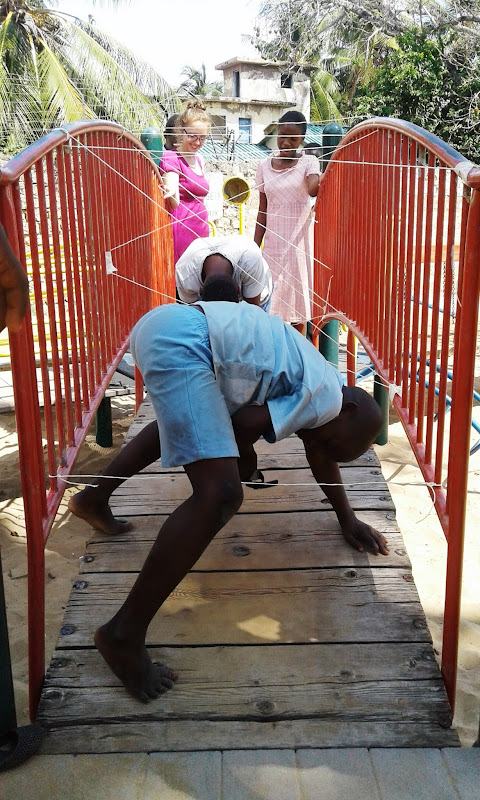
Well done Team Mwamburi, the overall winners. Together they built the strongest chair, waddled their way through the relay race, tried their hand at canoeing on the Wii, got very wet in our water game, directed their blindfolded leader around our playground and much more!
We had a wonderful day, we hope you enjoy the pictures!